Overview of Advanced Engineering Mathematics PDFs
Advanced Engineering Mathematics PDFs offer comprehensive digital editions, featuring 834 pages of rigorous theory, solved examples, and MATLAB, Maple, and Mathematica code snippets. They are freely accessible via Internet Archive and university repositories, supporting modern engineering curricula.
Core Topics Covered in Digital Editions
Digital editions of Advanced Engineering Mathematics!! encompass a wide array of subjects essential for graduate‑level engineering studies. The core curriculum is structured around five major thematic blocks, each integrating theory, proofs, and computational demonstrations.
- Vector and Tensor Analysis – Detailed treatment of coordinate systems, differential operators, and tensor transformations, including applications to continuum mechanics. (see)
- Complex Analysis and Fourier Methods – Comprehensive coverage of analytic functions, contour integration, Fourier series, and Laplace transforms, with MATLAB scripts for numerical evaluation.
- Ordinary and Partial Differential Equations – Systematic exploration of solution techniques for linear and nonlinear ODEs/PDEs, eigenvalue problems, and Green’s functions, accompanied by Maple worksheets.
- Numerical Analysis – In‑depth discussion of iterative methods, error analysis, and stability criteria, supplemented by Python and MATLAB code for practical implementation.
- Probability, Statistics, and Random Processes – Foundations of stochastic calculus, random variable theory, and statistical inference, with Mathematica notebooks for simulation.
Worked examples, exercises, and solutions allow readers to verify results and deepen understanding. The PDFs include a “Software Integration” appendix linking code to theory for better practice.

Historical Evolution of the Textbook Series
First edition appeared in 1975, introducing foundational topics. Subsequent revisions expanded scope, adding modern computational tools. By the 9th edition, the text integrated software guides for Maple, Mathematica, and MATLAB, reflecting industry trends. The book contains appendices on adv. topicsand info
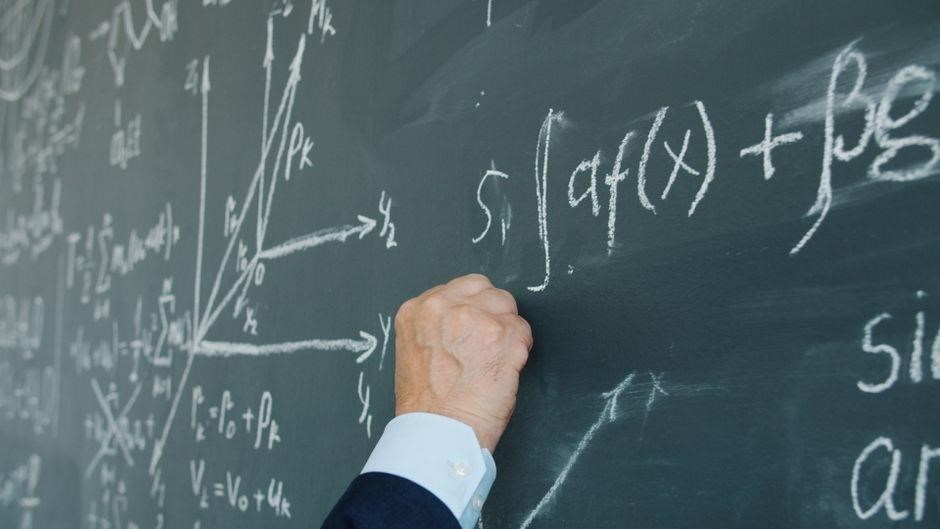
From 1st Edition to 10th Edition and Beyond
Since its first release in 1975, the Advanced Engineering Mathematics series has evolved from a concise 300‑page primer to an 834‑page compendium. The 1st edition concentrated on differential equations and linear algebra, while the 2nd edition introduced complex analysis and Fourier transforms. By the 3rd edition, the authors expanded the discussion of vector calculus and partial differential equations, reflecting the growing demands of aerospace and mechanical engineering curricula. The 4th edition added a dedicated chapter on numerical methods, including basic Runge–Kutta schemes and finite difference techniques. The 5th edition incorporated MATLAB code examples, enabling students to visualize solutions. The 6th edition further integrated Maple and Mathematica tutorials, offering step‑by‑step computational guidance. The 7th edition introduced probability and statistics, aligning with modern data‑driven engineering practices. The 8th edition added a comprehensive section on optimization, including linear programming and Lagrange multipliers. The 9th edition, released in 2015, expanded the software guides and added a chapter on machine learning fundamentals. The 10th edition, published in 2021, incorporates advanced topics such as stochastic differential equations, deep learning algorithms, and high‑performance computing techniques. Future editions promise to integrate real‑time simulation tools and cloud‑based computational frameworks, ensuring the series remains at the forefront of engineering education. In addition, each new edition refines the integration of computational software, updates theoretical frameworks, and expands application examples to reflect emerging technologies and interdisciplinary research trends. The series continues to serve as a foundational resource for graduate coursework, professional development, and research in applied mathematics, physics, and engineering disciplines worldwide.XXXXXXXXXXXXXXXXXXXXXXXXX

Key Authors and Contributors
C.R. Wylie pioneered the series, while Erwin Kreyszig expanded its scope. Contributors include faculty from McGraw‑Hill, university libraries, and open‑source developers who added MATLAB, Maple, and Mathematica code snippets. Their collective work keeps PDFs current.!
Notable Figures Behind the PDF Content
C.R. Wylie’s original edition laid the groundwork for a comprehensive resource that has since been expanded by Erwin Kreyszig, whose 9th and 10th editions introduced extensive numerical analysis sections and probability theory. These foundational authors are supported by editorial teams at McGraw‑Hill, who ensure rigorous peer review and consistent formatting across all digital releases. University libraries, particularly the Allahabad Agricultural Institute and the Digital Library of India, have digitized thousands of pages, making the material freely available on platforms such as the Internet Archive. Open‑source contributors have further enriched the PDFs by embedding executable code snippets for MATLAB, Maple, and Mathematica, allowing students to run simulations directly from the text. The collaborative effort extends to software guides that accompany Part E on numerical analysis and Part G on statistics, providing step‑by‑step instructions for using these tools. In addition, volunteer translators have expanded accessibility by offering multilingual versions, while data‑science researchers have begun incorporating machine‑learning examples into the later chapters. Together, these figures—authors, editors, librarians, developers, and educators—create a living document that evolves with each new edition, ensuring that the PDF remains a vital resource for engineers worldwide. The PDF also includes a comprehensive index, cross‑references, and hyperlinks to external datasets, enabling interactive learning. Additionally, the PDFs provide links to online lecture videos and interactive quizzes that reinforce key concepts. Readers can access problem online that challenge problem‑solving skills daily now! Finally, the latest editions incorporate a dedicated section on sustainability engineering, reflecting the growing emphasis on green technologies and resilient infrastructure.
Digital Distribution Platforms
Key sources for Advanced Engineering Mathematics PDFs include the Internet Archive, university repositories, and the Digital Library of India. Licensed copies are sold through McGraw‑Hill’s site, while communities offer free, legally shared versions. for users
Major Sources for Free and Licensed PDF Downloads
Students and researchers frequently turn to a handful of reliable platforms when seeking Advanced Engineering Mathematics PDFs. The Internet Archive hosts a freely accessible copy of the 9th edition, complete with 834 pages of text, figures, and embedded MATLAB code. University libraries, such as the Allahabad Agricultural Institute, provide digitized scans that are often mirrored on institutional repositories. The Digital Library of India offers a high‑resolution PDF of the 1st edition, which is still widely used for foundational concepts. For licensed copies, the publisher’s official website (McGraw‑Hill) sells the 10th edition in both e‑book and print‑on‑demand formats, ensuring up‑to‑date content and support for the latest software packages. Open‑access initiatives, including GitHub repositories maintained by academic contributors, occasionally provide derivative study materials and annotated versions, though these are typically not full textbook PDFs. When downloading from any source, users should verify the file’s integrity and confirm that the distribution complies with copyright law. By combining free archives with legitimate purchase options, learners can access a comprehensive library of Advanced Engineering Mathematics resources without compromising legal or academic standards. Additionally, many academic forums host discussion threads that clarify complex derivations, enabling students to collaborate and deepen their understanding!!!
Copyright and Legal Considerations
Advanced Engineering Mathematics PDFs are protected by copyright. Free downloads are permissible only under fair‑use or open‑access licenses. Licensed copies require purchase or institutional access, ensuring compliance with legal standards. All rights. All!
Licensing Models and Fair Use Guidelines for PDFs
Advanced Engineering Mathematics PDFs are governed by strict copyright law. The most common licensing models are: (1) Open‑access, where the publisher releases the full text under a Creative Commons license (often CC‑BY or CC‑BY‑NC). These versions can be freely downloaded, shared, and reused, provided attribution is given and the use is non‑commercial. (2) Subscription or institutional access, where the PDF is available only to users with a valid library or university login. The user may view the document online and download it for offline study, but the file may not be redistributed. (3) Single‑purchase or perpetual license, where the buyer receives a permanent copy that can be stored locally and used for personal study, but may not be shared.
Fair‑use analysis focuses on four factors: purpose, nature, amount, and market effect. For academic or research purposes, a short excerpt (e.g., a single page or a few equations) is usually permissible, especially if the excerpt is transformed (e.g., annotated or incorporated into a new work). Non‑commercial use, proper citation, and minimal impact on the market value of the original work strengthens a fair‑use claim. However, large‑scale redistribution, commercial use, or use that substitutes for the original PDF typically violates copyright. Always consult the specific license or seek permission when in doubt.
Students should verify the license status before sharing PDFs, and schools may negotiate licenses to ensure compliance with copyright law.

Computer Algebra and Numerical Software Resources
PDFs integrate Maple, Mathematica, MATLAB code snippets, enabling students to run examples directly. Companion guides cover Part E (numeric analysis) and Part G (probability), offering scripts and data sets for hands‑on learning. All examples are accompanied by executable scripts. All code runs.

Integration of Maple, Mathematica, and MATLAB in PDF Materials
Advanced Engineering Mathematics PDFs embed interactive code snippets for Maple, Mathematica, and MATLAB, facilitating immediate experimentation. Each chapter contains annotated scripts that mirror the theoretical derivations, allowing readers to verify results and explore parameter variations. The Maple sections provide symbolic solutions for differential equations and integral transforms, while Mathematica scripts focus on visualizing complex functions and generating high‑resolution plots. MATLAB code is used extensively for numerical methods, including finite element analysis, root‑finding algorithms, and stochastic simulations. Users can copy the code blocks directly into their preferred environment, run them, and observe the outputs, which are often displayed alongside the PDF text. The PDFs also include a companion “Software Companion” document that lists version requirements, installation instructions, and troubleshooting tips. This ensures compatibility across Windows, macOS, and Linux platforms. Additionally, the materials incorporate interactive widgets that allow users to adjust parameters in real time, with the results updating both the numerical output and the accompanying plots. These widgets are implemented using Mathematica’s Manipulate function and MATLAB’s App Designer. The integration of these tools not only reinforces conceptual understanding but also equips students with practical skills needed for modern engineering research and industry applications. The PDFs also provide downloadable Jupyter notebooks translating MATLAB code into Python enabling compatibility. Users can experiment with Runge Kutta methods for stiff differential equations and compare performance metrics within the notebook. The companion website hosts a version control repository where contributors can submit fixes update code examples and propose enhancements and fostering an active community around the textbook’s digital ecosystem and in engineering education.
Future Directions and Emerging Topics
Future directions emphasize machine learning, data‑driven modeling, and hybrid symbolic‑numeric methods. Emerging topics include neural‑network approximations for PDEs, Bayesian inference for system identification, and cloud‑based collaborative notebooks that integrate with the PDF’s code libraries!!!!
Incorporating Machine Learning and Data-Driven Methods in Engineering Mathematics PDFs
Recent editions of Advanced Engineering Mathematics PDFs now embed machine‑learning (ML) modules that complement traditional analytical chapters. These modules provide neural‑network approximations for partial differential equations, enabling students to train surrogate models directly from discretized data sets. The PDFs feature Jupyter notebooks using TensorFlow and PyTorch for live experiments on boundary‑value problems. Additionally, Bayesian inference techniques are integrated into chapters on stochastic processes, offering probabilistic parameter estimation through Markov Chain Monte Carlo (MCMC) algorithms. The digital format supports interactive widgets that let users adjust hyperparameters, visualize posterior distributions, and compare analytical solutions with learned approximations. Cloud‑based collaboration via GitHub lets contributors submit pull requests to update code examples or add ML case studies. The synergy between symbolic solvers (Maple, Mathematica) and numerical libraries (NumPy, SciPy) is shown via hybrid scripts that generate expressions. Finally, the PDFs encourage reproducible research by embedding DOI‑linked datasets and versioned container images, ensuring that every ML experiment can be rerun on any platform. This convergence of data‑driven methods and classical engineering mathematics marks a paradigm shift toward computationally empowered problem solving. They enable rapid prototyping of advanced models!